Table of Contents Risk management is the process of identifying, assessing, and controlling threats to
Yet many boards still rely on static, outdated tools such as
spreadsheets or quarterly reports. These methods fail to capture the speed, complexity, and interconnectedness of the modern risk landscape.
Boards today are balancing risks across multiple dimensions:

Require direct board oversight, scenario testing, and frequent committee reporting.

Managed by executives, with updates escalated to the board.

Tracked by management, escalated only if thresholds are crossed.
Based on Deloitte’s boardroom insights, directors seek:
Top strategic risks – consolidated across the enterprise.
Risk distribution – across markets, business lines, and categories.
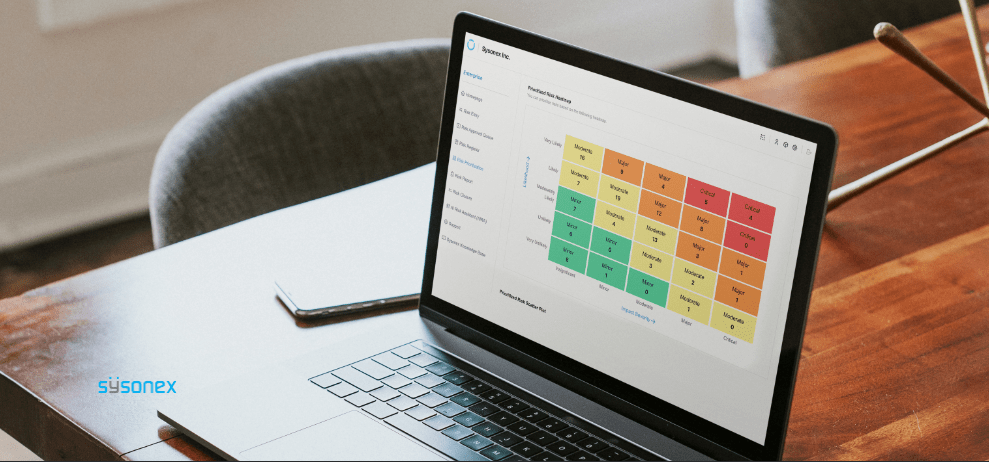
Red-zone risks requiring immediate governance attention.
Risks escalating or de-escalating over time.
Actual exposures against board-approved thresholds.
How quickly risks escalate and how they cascade.
Ownership by executives linked to governance structures.
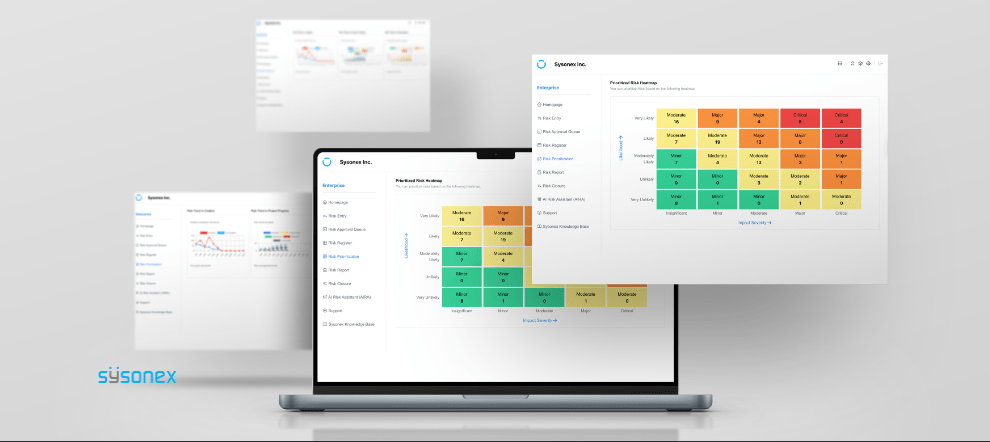
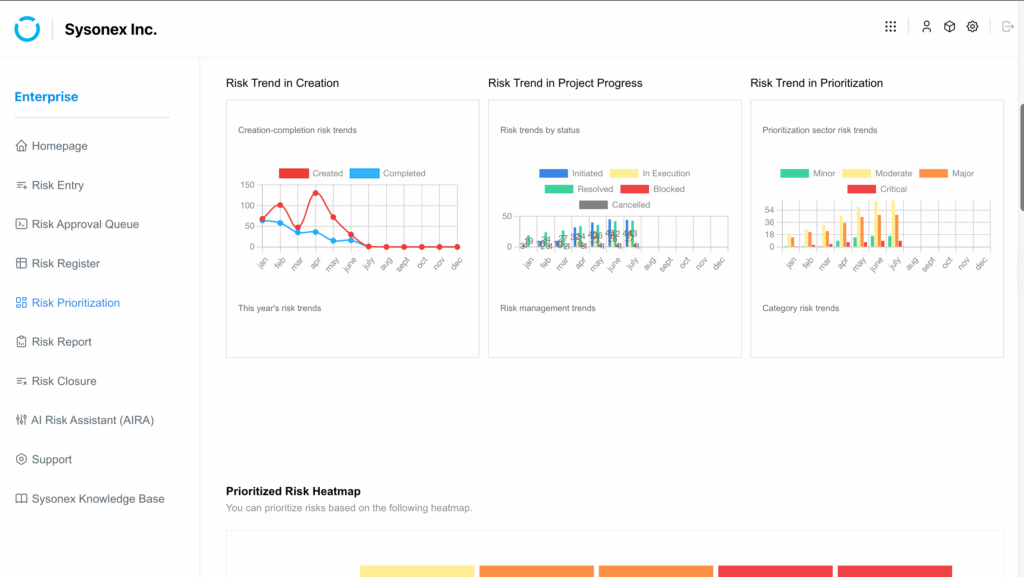
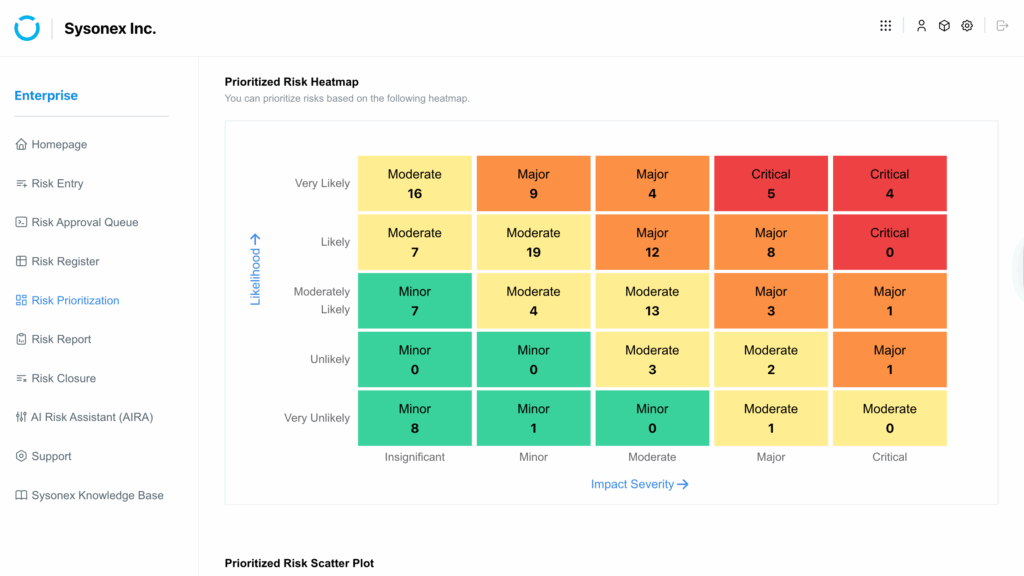
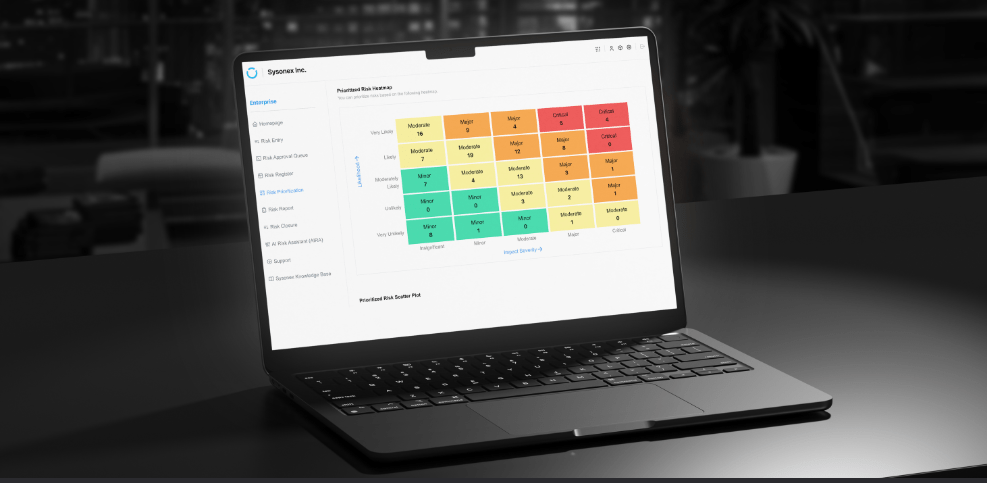
Modern board-ready heatmaps go beyond static visuals:
The demands on boards are clear: static oversight is no longer enough.
SysRisk differentiates itself in four fundamental ways:
Risks recalibrated dynamically with AI-driven threat intelligence, enabling proactive defense against evolving attack vectors. SysRisk heatmaps highlight vulnerabilities in real time, helping organizations prioritize mitigation before threats escalate.
Scenario models assess carbon pricing, reputational shifts, and policy impacts, allowing businesses to stress-test sustainability strategies. By visualizing climate-linked risks, organizations can align better with investor expectations and regulatory frameworks.
Real-time mapping of market volatility, credit exposures, and interest rate changes ensures stakeholders can spot vulnerabilities across portfolios. SysRisk enables more resilient decision-making in uncertain financial environments.
Human, environmental, and financial costs are visualized for high-severity incidents. Heatmaps provide clarity on cascading effects of disruptions, empowering teams to strengthen continuity plans and safeguard resources.
A systemic dashboard reveals interconnected risks across categories, fostering cross-departmental alignment. This holistic perspective ensures leadership can manage trade-offs and dependencies with precision.
Table: Comparison between Static vs. AI-Powered Heatmaps
| Dimension | Static Heat Maps | SysRisk AI Heat Maps |
|---|---|---|
| Data Source | Manual, periodic | Real-time operational, financial, regulatory, and market feeds |
| Update Frequency | Quarterly or annual | Continuous, dynamic |
| Board Visibility | One-time snapshot | Predictive, trend-based |
| Analysis Depth | Likelihood vs. impact | Adds velocity, interconnections, financial exposure |
| Decision Support | Prioritization only | AI-driven recommendations, scenario testing |
| Collaboration | Shared PDFs/PPTs | Interactive, governance-integrated dashboards |
| Legacy Tool | Challenge | SysRisk Advantage |
|---|---|---|
| Spreadsheets | Error-prone, siloed, static | Automated, centralized, real-time |
| SharePoint/Intranet | Weak visualization, no workflows | Integrated dashboards with AI alerts |
| Jira/ServiceNow | Operational focus, not board-ready | Enterprise-wide, strategic board insights |
Want to learn more about our ideas and thought leadership, please read the following. If there are any areas of interest from your organization, please feel free to reach out to us.

Table of Contents Risk management is the process of identifying, assessing, and controlling threats to

Digital transformation remains an intimidating challenge. Learn how to craft a Solution Blueprint to succeed in your digital transformation.

Digital transformation remains an intimidating challenge. Learn how to craft a Solution Blueprint to succeed in your digital transformation.

Why SPARX? As an Enterprise Architecture (EA) consultant, I am going into organizations with established