The Future of Internal Audit in Bangladesh

The Future of Internal Audit in Bangladesh

AI-Driven, Connected and Continuous Audit with SysAudit
Transforming Internal Audit in Bangladesh through AI Powered Automation, Continuous Monitoring, and IFRS 9 Assurance

www.sysonex.com

Sysonex, Risk Management

Table of Contents

Executive Summary

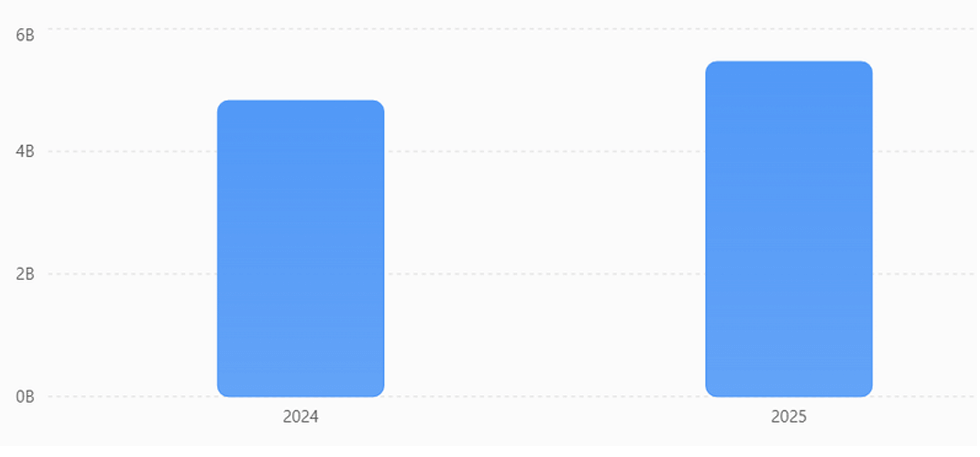
Bangladesh is entering a new phase of economic and digital maturity. The country’s 2025 GDP reached approximately US$456.3 billion, while digital transactions reached 5.463 billion in volume and approximately Tk 102.24 trillion in value. Digital transaction volume and value both increased by 13% year on year in 2025.
For internal audit functions, this growth has a direct implication: organizations are operating across larger transaction populations, more interconnected systems, more complex supply chains, and increasingly digital control environments.
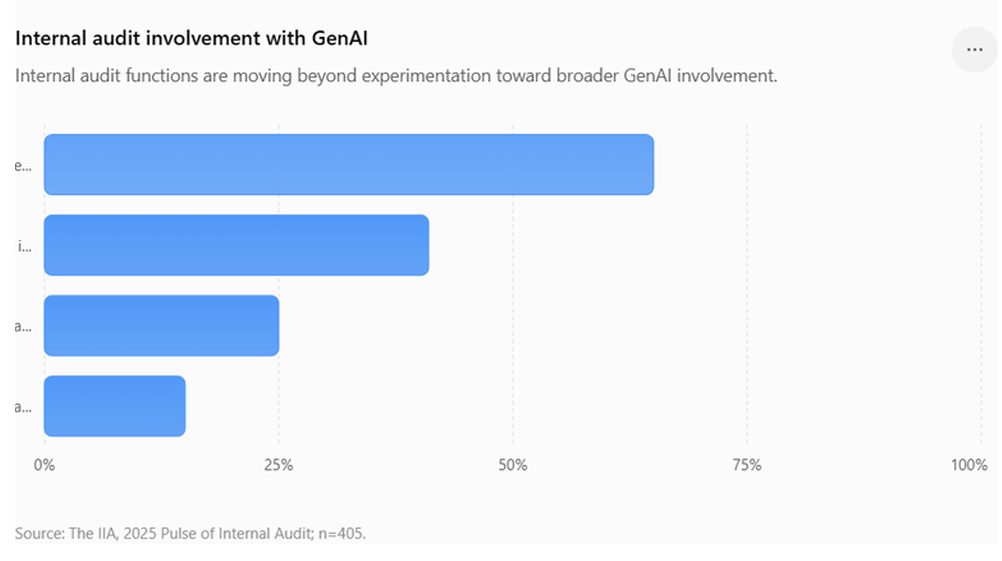
At the same time, the audit profession itself is changing. In 2025, 41% of surveyed internal audit functions were already using generative AI, while 65% planned to increase their involvement with GenAI. By 2026, a Gartner poll found that 93% of audit leaders reported some level of AI use, but only 38% had an AI strategy.
But technology does not remove professional judgment. The future of internal audit is not autonomous auditing. It is a model in which technology helps auditors work with larger volumes of information, identify patterns, streamline repetitive activities, manage workflows, and focus attention where human judgment matters most.
SysAudit by Sysonex is designed for this emerging operating model.
It brings audit planning, assignment, execution, evidence, findings, corrective actions, workflow automation, monitoring and management visibility into one connected environment.

Bangladesh Is Growing. Audit Complexity Is Growing With It.

Bangladesh’s enterprise economy is changing quickly. As businesses expand and digitize their operations, the environments they operate in are becoming larger, more connected, and increasingly complex. Banks, manufacturing groups, garment exporters, telecommunications providers, conglomerates, and other large organizations now operate across multiple locations, systems, entities, vendors, and business units.
The World Bank places Bangladesh’s 2025 GDP at approximately US$456.32 billion, with GDP per capita at approximately US$2,597. At the same time, Bangladesh Bank reports that the country processed more than 10.8 billion total transactions in 2025, including 5.463 billion digital transactions valued at approximately Tk 102.24 trillion. These figures reflect the growing scale of transactions, data, systems, and controls that modern assurance functions must understand.
For internal audit, this creates an important shift. Audit teams increasingly need to provide assurance across interconnected systems, automated workflows, digital transactions, third-party relationships, regulatory requirements, and expanding datasets. Managing this complexity through spreadsheets, emails, disconnected documents, and manual follow-ups is becoming increasingly difficult.
The challenge is no longer simply how to conduct more audits. It is how to build an audit function capable of keeping pace with the scale, speed, and digital complexity of modern enterprise operations.
Artificial Intelligence is no longer just a technology initiative—it is a strategic governance priority. As AI becomes increasingly embedded in business operations and decision-making, boards must oversee its risks and opportunities with the same rigor as financial, operational, and regulatory matters. While 70% of risk leaders expect AI to be central to enterprise risk strategy, nearly 90% of organizations still lack formal AI governance frameworks, creating a significant gap between AI adoption and effective oversight.
Bangladesh in numbers :
Indicator Latest figure
GDP, 2025 US$456.32B
Total transactions, 2025 10.859B
Digital transactions, 2025 5.463B
Digital transaction value Tk 102.242T
Digital transaction growth +13%

Sources: World Bank; Bangladesh Bank.

Digital transaction volume in Bangladesh :

The Traditional Audit Limitations

For decades, the image of an auditor has been associated with vouchers, invoices, ledgers, spreadsheets, confirmations and working papers.

Those fundamentals remain important.

What has changed is the environment around them. Large organizations may process millions of transactions across multiple systems, entities and business units. In these environments, relying heavily on disconnected manual procedures and relatively small samples can make it increasingly difficult to identify where the most significant issues actually exist.
A typical internal audit function may need to coordinate:
Annual Planning → Engagements → Assignments → Evidence Requests → Findings → Management Responses → Corrective Actions → Follow-Up → Closure
When these processes are managed through separate spreadsheets, email chains and document repositories, considerable time can be spent simply maintaining the process.
Audit teams repeatedly need to determine:
  • What has been completed?

  • What is still pending?

  • Who owns the finding?

  • Which evidence has been received?

  • What is overdue?

  • Which corrective actions remain open?

  • Which engagements require management attention?

The result is an administrative problem before it becomes an audit
problem.

Fragmented Audit Administration to Connected Assurance

A spreadsheet can track a list.
An email can communicate a request.
A folder can store evidence.

But none of these, individually or collectively, automatically creates a connected audit operating environment.
A typical internal audit function may need to coordinate:
Annual Planning → Engagements → Assignments → Evidence Requests → Findings → Management Responses → Corrective Actions → Follow-Up → Closure
Connected Audit Management:
Plan → Assign → Execute → Evidence → Findings → Actions → Monitor → Close
The distinction is important.
Digital transformation in audit should not simply mean moving paper documents onto a computer.
It should create a connected lifecycle in which audit information remains structured from planning through closure.

Internal Audit Has Entered the AI Era

Artificial intelligence has moved from experimentation into practical internal audit use.
The IIA’s 2025 Pulse of Internal Audit reported that:
  • 41% of respondents were already using GenAI for internal audit activities.

  • 65% planned to increase their involvement with GenAI.

  • 25% were providing advisory services related to GenAI.

  • 15% were providing assurance related to GenAI.

Sampling to Data-Driven Assurance

Technology allows internal audit to work differently with large
populations of information.

Instead of relying exclusively on the question: “What did our sample reveal?”)

Audit teams can increasingly ask: “What patterns and exceptions exist across the broader population?”

Analytics can help identify unusual amounts, dates, users, transaction frequencies, duplicates, unexpected combinations, and concentrations requiring further investigation.
The emerging audit model can therefore be represented as:
Data → Analytics → Risk → Exception → Investigation → Evidence → Judgment

The Future Audit Function: Continuous, Connected and Human-Led

The emerging internal audit function can be characterized by six principles:

Continuous: Greater ongoing visibility rather than relying exclusively on periodic snapshots.


Data-Driven: Using larger information populations to understand patterns and exceptions.


AI-Assisted: Applying AI to analytical, repetitive, and information-intensive activities.


Exception-Focused: Directing professional attention toward unusual and higher-risk areas.


Connected: Bringing planning, execution, evidence, findings, actions, and reporting together.


Human-Led: Keeping professional skepticism, accountability, and judgment with auditors.
These characteristics are consistent with the future audit model outlined in the source material.

IFRS 9: A New Assurance Challenge for Bangladesh

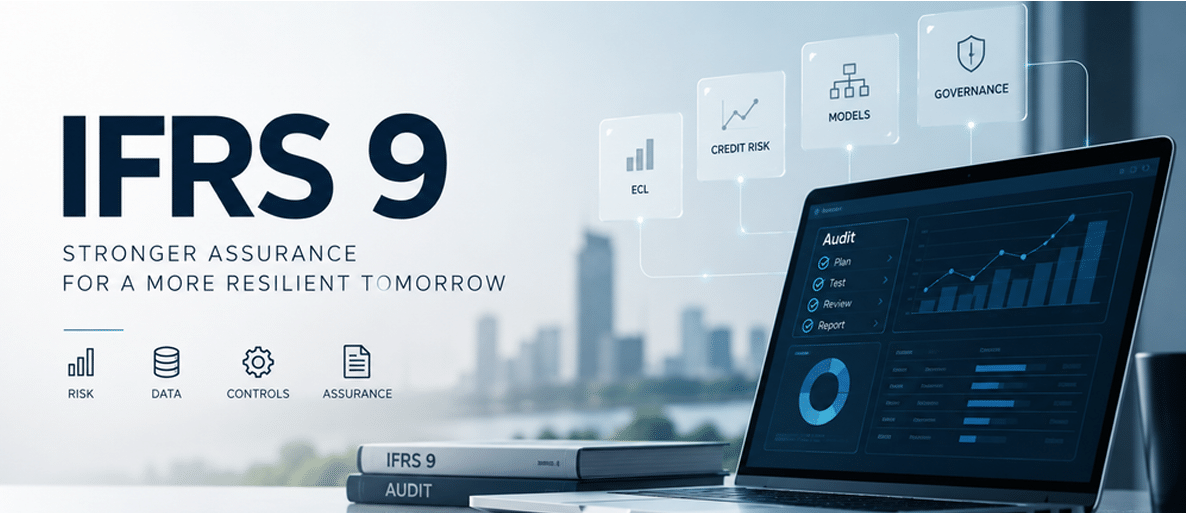
For Bangladesh’s banking sector, audit transformation is occurring alongside another major change: IFRS 9 Financial Instruments and the transition toward Expected Credit Loss-based provisioning.
IFRS 9 introduces a more forward-looking approach to credit-loss recognition, increasing the importance of areas such as:
  • Expected Credit Loss (ECL)
  • Significant Increase in Credit Risk (SICR)
  • Stage 1, Stage 2 and Stage 3 classification
  • PD, LGD and EAD-related models and assumptions
  • Forward-looking economic scenarios
  • Data quality
  • Model governance
  • Controls and approvals

SysAudit and IFRS 9: Managing the Assurance Lifecycle

SysAudit should not be viewed as an ECL calculation engine. Its role is to help internal audit teams manage the assurance process surrounding IFRS 9.

An IFRS 9 audit may involve reviewing:

IFRS 9 Area Internal Audit Focus
ECL Governance Roles, policies, oversight and approvals
SICR Criteria, thresholds and controls
Staging Stage 1, 2 and 3 classification processes
Models Governance around PD, LGD and EAD
Data Quality Accuracy, completeness and timeliness
Scenarios Forward-looking assumptions and approvals
Controls Design and operating effectiveness
Evidence Documentation and traceability
Remediation Findings, ownership and corrective actions

Introducing SysAudit: AI-Powered Audit Management

SysAudit by Sysonex is designed to help organizations move beyond fragmented audit administration.
Instead of managing audit plans, assignments, evidence, findings, corrective actions, and status information across disconnected spreadsheets and emails, SysAudit brings the audit lifecycle into a connected digital environment.
Plan. Assign. Track. Resolve.
With SysAudit, organizations can:
  • Automate repetitive audit workflows
  • Track audit progress in real time
  • Centralize findings and corrective actions
  • Maintain structured audit evidence
  • Strengthen ownership and accountability
  • Gain greater visibility from planning through closure
The objective is not simply to digitize existing audit administration. It is to create a more connected, visible, accountable, and technology enabled audit function.

The Auditor of the Future

Technology will change what auditors spend their time doing. Activities such as repetitive processing, manual document navigation, routine checking, and large-volume manual analysis can increasingly be supported by technology.
At the same time, skills such as data interpretation, risk assessment, investigation, professional skepticism, critical thinking, communication, accounting judgment, business understanding, and AI-output validation become increasingly important.

The future auditor can therefore be represented as:

Audit Knowledge + Business Understanding + Data Analytics + AI Literacy + Professional Skepticism + Human Judgment
AI literacy is particularly important. Auditors need to understand what AI can do, where errors can occur, how outputs should be validated, and when human intervention is essential.
Technology can accelerate the process. Accountability remains human.

The Future of Internal Audit in Bangladesh

Bangladesh’s businesses are becoming larger, more digital, and increasingly data-intensive. Financial institutions are navigating evolving requirements such as IFRS 9. AI adoption is accelerating. Audit teams are being asked to provide greater visibility and stronger assurance across increasingly complex environments.
Yet many audit functions still depend on spreadsheets, email chains, disconnected evidence, and manual follow-ups.
That gap creates an opportunity to rethink the audit operating model
 
  • From fragmented to connected.
  • From manual to automated.
  • From periodic visibility to continuous monitoring.
  • From information overload to exception-focused assurance.
  • From technology-assisted administration to AI-powered audit management.
   
The future is not about replacing auditors with AI.
It is about giving auditors better technology, better visibility, and better-connected processes so they can focus on the work that requires professional expertise and judgment.

Conclusion

For Bangladesh’s financial institutions, the transition toward IFRS 9 adds another important dimension. Expected Credit Loss, SICR, staging, forward-looking information, model governance, data quality, controls, and regulatory requirements create an assurance environment that demands greater structure, traceability, and oversight.
Technology alone, however, does not create better assurance. AI can identify patterns. Analytics can surface exceptions. Automation can accelerate workflows. Digital platforms can improve visibility. But auditors must still investigate the evidence, challenge assumptions, assess controls, understand risk, and exercise professional judgment.

This is the future that SysAudit by Sysonex is designed to support.

Related Articles

Want to learn more about our ideas and thought leadership, please read the following. If there are any areas of interest from your organization, please feel free to reach out to us.