Board-Ready Enterprise Risk Management

Board-Ready Enterprise Risk Management

The future by SysRisk ERM
www.sysonex.com

Table of Contents

Executive Summary

As enterprise risk landscapes become more volatile and complex, boards of directors are increasingly under pressure to ensure oversight, accountability, and strategic alignment. Traditional risk management tools such as spreadsheets, Jira, and SharePoint fall short in delivering the level of insight and governance required at the board level.

Introduction to Sysonex and SysRisk ERM

Sysonex is a next-generation technology company specializing in
intelligent, enterprise-grade solutions across the risk, compliance, audit,
and governance landscape. Our mission is to empower organizations to
navigate uncertainty with confidence, agility, and insight. At the core of
our innovation is the SysGRC Platform, an AI-driven governance, risk, and
compliance foundation that supports a suite of fully integrated modules.

Each solution leverages the power of automation, real-time analytics, and centralized data to enhance organizational resilience, regulatory compliance, and operational transparency.
Our flagship Enterprise Risk Management (ERM) module is purpose built for executive leadership and board directors. It delivers a strategic lens into enterprise-wide risks, enabling informed oversight, better prioritization, and data-driven decision-making at the highest level. With configurable frameworks, dynamic dashboards, and predictive analytics, SysRisk ERM is reshaping how modern organizations anticipate and respond to risk.

SysRisk – Enterprise
Risk Management Suite

SysIncident –
Incident and Event
Management Suite

SysAudit – End-to-End
Audit Management
SuiteAwards

Changing Role of Boards in Risk Oversight

Today’s boards of directors are no longer passive observers. They are proactive stewards of enterprise value, resilience, and innovation. As business environments grow more complex and uncertain, modern boards are demanding smarter tools and clearer visibility to fulfill their oversight responsibilities. The expectations have shifted significantly, and with them, the standards for operational excellence.
Key Demands of Modern Boards:
a. Increased Oversight: Boards expect deeper, more structured engagement across strategic, operational, and emerging risks—from cybersecurity to ESG to AI ethics.
b. Heightened Accountability: Directors are being held responsible for enterprise outcomes and cultural alignment, prompting greater diligence in governance and risk reporting.
c. Real-Time and Actionable Insights: Static reports are no longer sufficient. Boards require live dashboards, trend analyses, and early warning indicators to respond proactively.
d. Centralized, Data-Driven Decision- Making: Siloed decision processes are giving way to unified platforms where cross functional risks can be analyzed holistically using trusted data

e. Governance That Ensures Transparency and Trust: Amid rising public and
regulatory scrutiny, boards must demonstrate that their oversight processes
are consistent, auditable, and aligned with best practices.

How Leading Boards Are Stepping Up

a. Tesla: The board has expanded its oversight to include AI governance,
executive decision-making risk, and climate-related innovation— demonstrating a proactive stance on disruptive technologies and
sustainability

b. Wells Fargo: Repeated cultural and compliance failures led to direct board accountability and forced a reevaluation of risk culture, board composition, and executive oversight.
c. OpenAI: A governance crisis around transparency and safety concerns led to board restructuring, highlighting the need for clear oversight of AI ethics and organizational transparency
d. Capital One: Following high-profile incidents, the board led an enterprise- wide cybersecurity maturity review— driving investment and policy alignment around digital risk.
e. Pfizer: In a bold data-driven move, the board backed strategic investments in mRNA vaccine technology, underscoring how risk informed decisions can unlock transformational opportunities.

What Boards Want from ERM Today?

As the pace of disruption accelerates, enterprise risk management (ERM) has become a critical focus for boards of directors. No longer satisfied with fragmented reporting or reactive strategies, boards now expect ERM platforms to deliver real-time intelligence, strategic alignment, and governance clarity. Below are the five core areas of functionality boards demand from a modern ERM solution:

Visualization

  • Real-time dashboards provide clear overviews of key risks and trends.
  • Interactive visuals offer actionable intelligence at a glance, enabling faster decision-making.

Prioritization

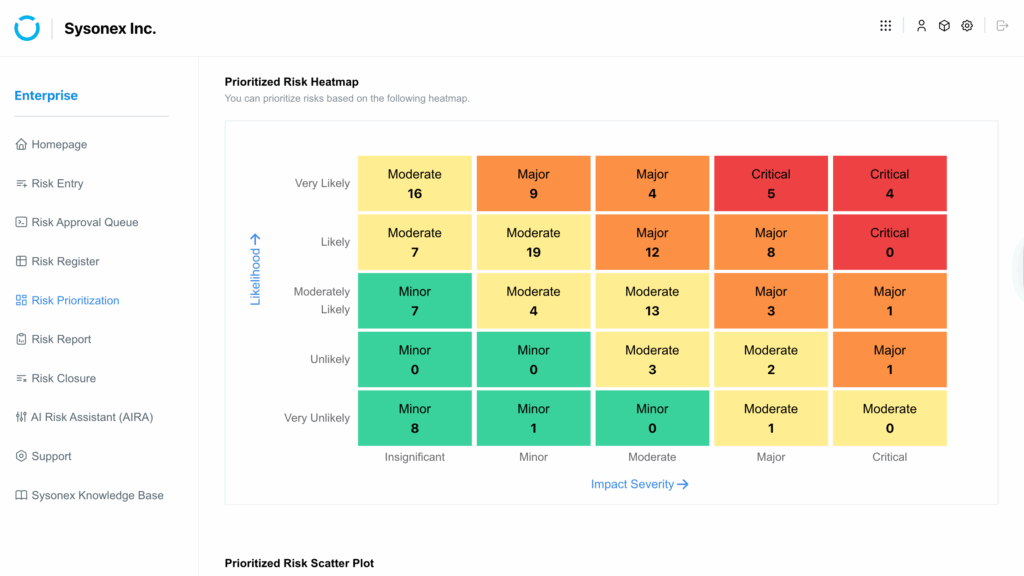
  • Heat maps and risk scoring help boards focus on critical and emerging risks.
  • Supports effective resource allocation and scenario comparison.

Central Collaboration

  • Role-based workflows define ownership, actions, and oversight.
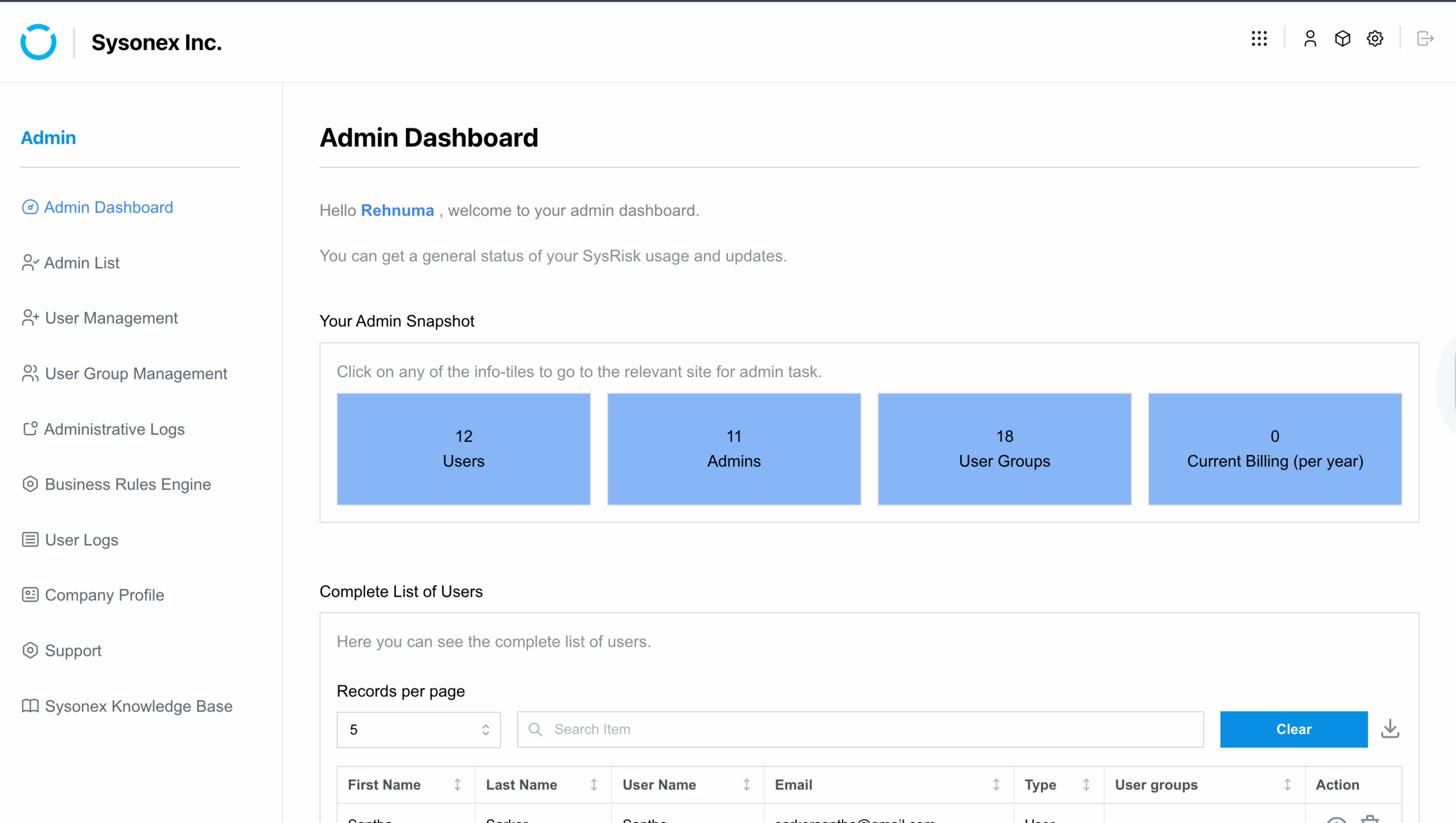
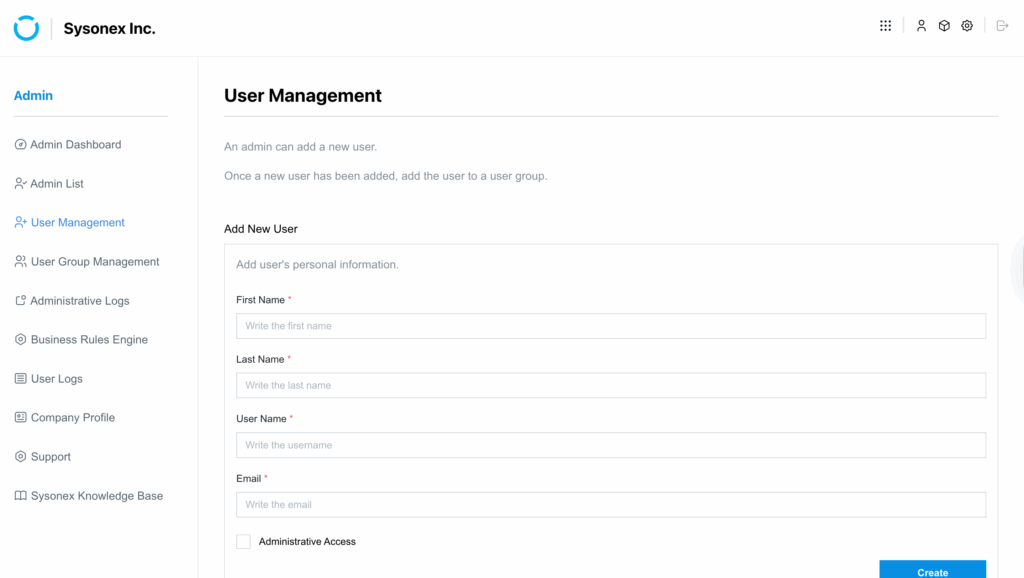
  • Granular access controls ensure secure, structured collaboration across teams.

Data-Driven Decision-Making

  • A centralized risk registry consolidates enterprise-wide risks.
  • Audit trails and documentation tracking provide transparency and defensibility.

Governance

  • Rules engines automate risk thresholds, approvals, and escalations.
  • Lifecycle tracking ensures risks are managed from identification to closure.
Boards are no longer passive observers, they expect ERM to support strategic oversight. SysRisk ERM is designed to meet these expectations with real-time insights, structured governance, and intelligent automation.

Where Traditional Tools Fail

Many organizations still rely on general-purpose tools to manage enterprise risks. Lacking real-time data, workflow automation, and structured accountability, they hinder effective oversight and decision- making at the board level

Table: Common tools and their limitations in delivering ERM:

Traditional Tool Primary Use Limitations
Spreadsheets
(Excel, Google Sheets)
Risk logs,
tracking matrices
  • No real-time updates
  • Error-prone manual inputs
  • Difficult version control
Jira Issue and task tracking
  • Not designed for ERM
  • Poor visibility for executives
  • Limited governance
ServiceNow ITSM and incident tracking
  • Not tailored for strategic risk
  • Workflow rigidity
  • Siloed risk views
SharePoint /
Intranet
Document storage
and internal communication
  • Weak collaboration features
  • No automated workflows
  • Lacks audit trails
PowerPoint Risk presentations
and reporting
  • Static content
  • Not linked to live data
  • Requires manual updates

SysRisk ERM Module in Action

The SysRisk ERM module equips boards and executives with the insights, controls, and tools they need to oversee risk strategically and confidently. Here’s how the module supports modern ERM expectations:

Visualization Capabilities

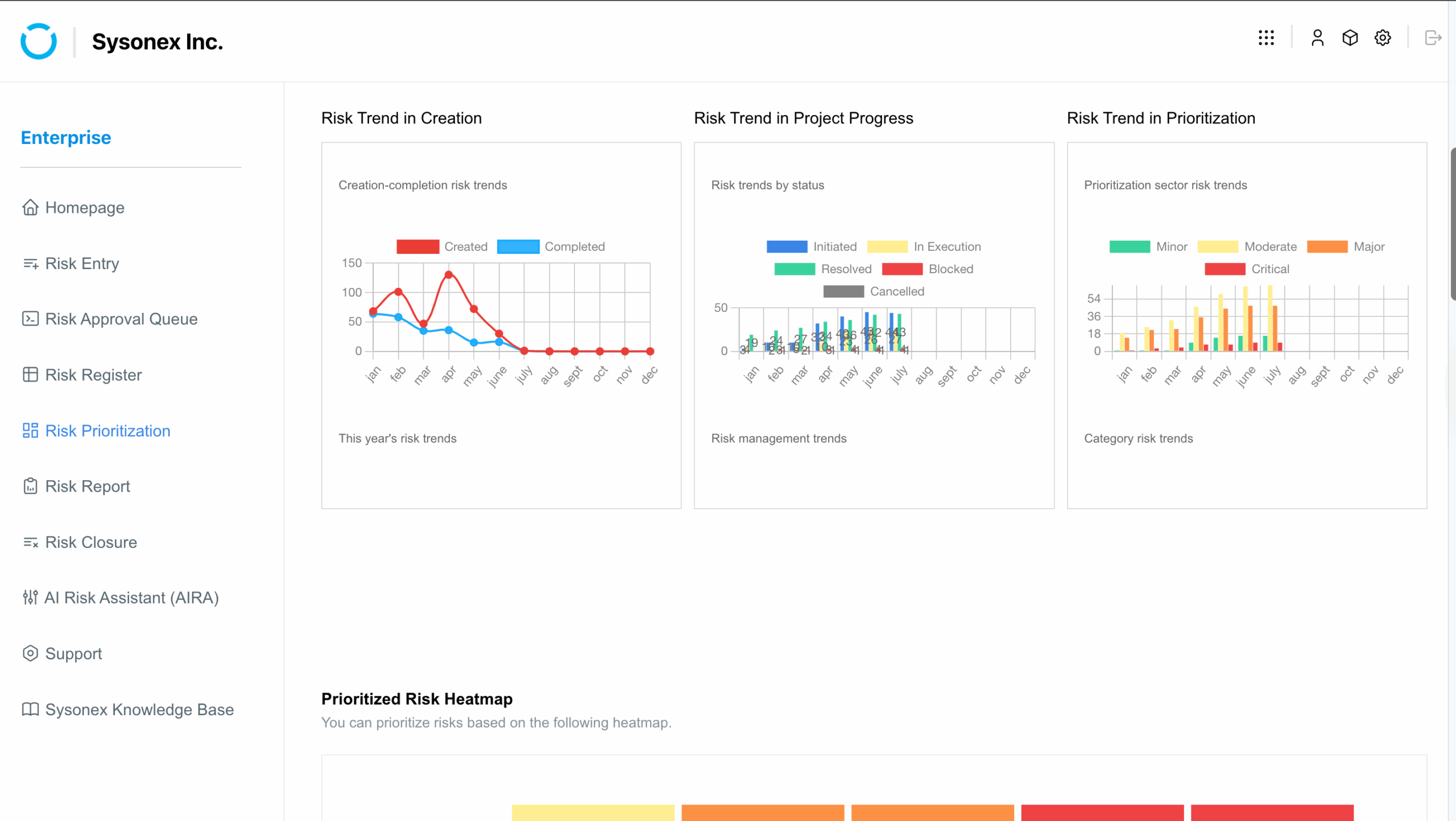
Gain instant clarity into your risk landscape with interactive, real-time visuals.
  • Live dashboards showcasing risk scores, categories, and status updates
  • Trends on monthly risk resolution and residual risk movement
  • Enterprise-wide view of total approved risks and emerging exposures

Risk Prioritization Tools

Focus board and executive attention on what matters most.

  • Heat maps ranked from minor to critical severity

  • Risk categorization (e.g., operational, technical, financial) for segmentation

  • Scatter plots based on likelihood and impact

  • Dollar value exposure analysis for quantified decision-making

Centralized Collaboration

Enable structured, role-based engagement across teams.

  • Assign risk owners, monitors, and closers with accountability

  • Lock risk categories to designated teams for secure handling

  • Shareable links provide direct access to specific risk records with appropriate access levels

Risk Register & Decision Support

Anchor decisions in a unified and trusted source of risk data.

  • Centralized, dynamically updated risk registry

  • Full audit trail with 7-year retention for closed risks

  • Attach documents, notes, and controls to each risk for traceability

Governance Enforcement

Automate oversight with policy-driven workflows and controls.

  • Role- and category-based access control to protect sensitive data

  • Trigger automated workflows through built-in rules engine

  • Enforce full lifecycle governance from identification to closure

Conclusion

SysRisk ERM represents the next evolution in enterprise risk management—designed to meet the strategic oversight needs of modern boards and executive teams. By delivering the five essential capabilities visualization, prioritization, central collaboration, data driven decision-making, and governance enforcement, SysRisk ERM closes the gaps left by outdated, disconnected tools like spreadsheets, SharePoint, and ticketing systems.
In today’s fast-moving risk landscape, boards need more than scattered data they need clear insights, operational context, and realtime control. SysRisk ERM enables organizations to move beyond reactive tracking and into a proactive, intelligent, and auditable approach to risk oversight.

Related Articles

Want to learn more about our ideas and thought leadership, please read the following. If there are any areas of interest from your organization, please feel free to reach out to us.